
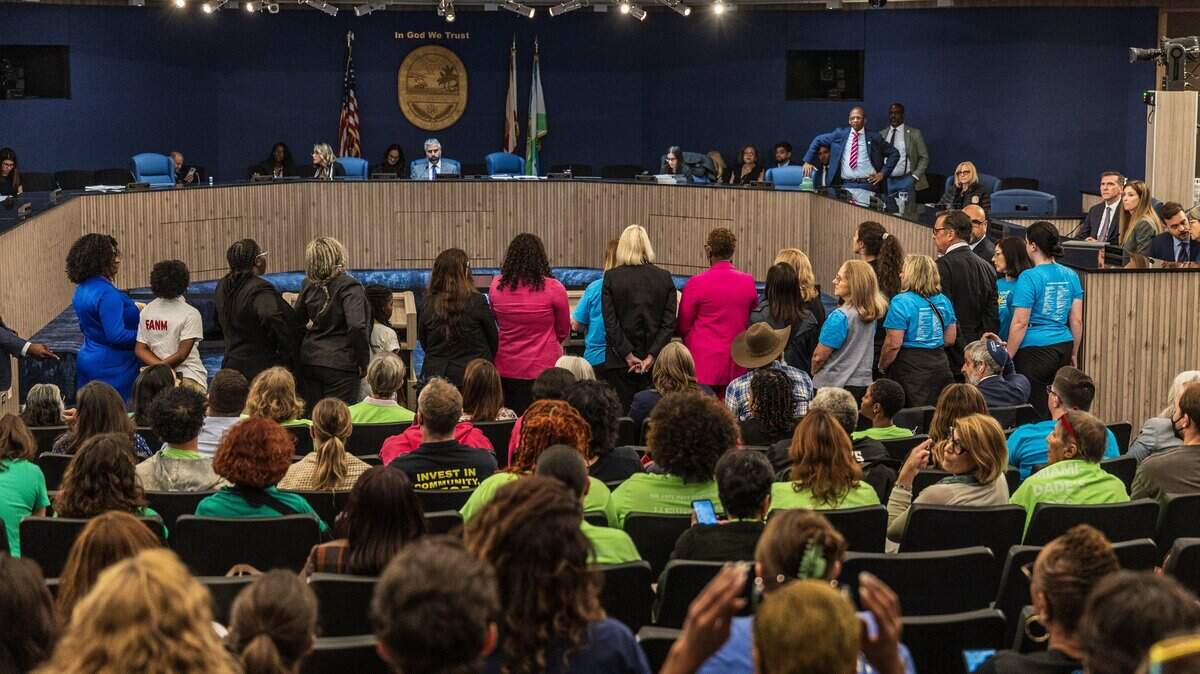
A group of residents at a Miami-Dade County Commission meeting in 2025.
Pedro Portal
pportal@miamiherald.com
For years, Miami-Dade County has talked about the need for more mental health services. Anyone who has watched a loved one struggle with mental illness, waited hours in an emergency room, or seen law enforcement respond to a mental health crisis knows our community needs more options.
That’s why I support opening the Miami-Dade County Mental Health Center.
But supporting the center does not mean writing a blank check. As chair of the Miami-Dade County Commission, I believe we have a responsibility to make sure this facility succeeds not just on opening day, but five, 10 and 20 years from now.
The discussion before the commission should not be whether we support mental health care. We do. The real question is whether we are putting the right safeguards in place to ensure this facility delivers results, remains financially sustainable, and operates with the transparency taxpayers deserve.
My proposal, which I will present to the Miami-Dade County Commission on June 16, does exactly that.
The Mental Health Center represents a significant public investment. Residents have every right to expect accountability. That’s why this proposal establishes formal oversight through the Behavioral Health Advisory Board and requires annual independent reviews by healthcare and research professionals.
Simply put, we should know what’s working, what isn’t and where improvements are needed. The proposal also requires biannual reporting on patient outcomes, continuity of care, diversion from the criminal justice system, financial sustainability and overall effectiveness. Success should be measured by outcomes, not intentions.
If we’re reducing repeat crises, helping people access treatment and easing the burden on emergency rooms and law enforcement, residents should see that progress. If improvements are needed, we should know that too.
The proposal also creates a process to review major operational changes before they occur. Important decisions should not happen behind closed doors. They should receive an independent review and public discussion before implementation.
Looking beyond day-to-day operations, the proposal also focuses on the facility’s long-term future.
It requires the development of a comprehensive strategic plan for the future use of the facility’s seventh floor. The plan will explore opportunities to expand behavioral health services, establish public-private partnerships, increase treatment capacity, support workforce development initiatives and identify innovative uses that can generate revenue while strengthening the facility’s long-term sustainability and success.
Planning for the future is especially important as Florida begins a broader conversation about property taxes. State leaders have advanced efforts to place a reduction in property taxes on the ballot for voters to decide. If approved, Miami-Dade County could face an estimated annual revenue reduction of more than $460 million.
No one knows exactly what the future will bring, but responsible government means planning ahead. As local governments face growing demands and potential revenue uncertainty, accountability matters more than ever.
That is why my proposal also establishes a simple principle: funding for the Mental Health Center should supplement, not replace, core County services. Residents should never be forced to choose between behavioral health investments and the essential services they rely on every day.
Mental health care and fiscal responsibility are not opposing goals. In fact, they go hand in hand.
We owe it to residents to expand access to treatment. We also owe it to them to make sure their tax dollars are spent wisely. I believe we can do both.
The Mental Health Center has the potential to change lives, strengthen public safety and provide help for people who too often fall through the cracks. By putting strong oversight, transparency and accountability in place from the start, we can give this facility the best possible chance to succeed.
That’s not delaying progress. That’s making sure we get it right.
Anthony Rodriguez is chairman of the Miami-Dade County Commission.