This is the first installment in a new series about mental health issues from a local perspective.
By Adam Stone
I have this amazing family friend who I often worry about. A former Examiner intern, she has dealt with serious anxiety for as long as I’ve known her.
For the purposes of this column, let’s call her Melissa.
Still in her 20s, Melissa is exceptionally bright, creative and thoughtful. She’s also faced mental health challenges throughout her life, and has spent much of the last decade dealing with especially acute symptoms after a particularly difficult period while coming of age.
She told me what daily life can feel like: endless loops of intrusive thoughts, difficulty concentrating and a nervous system that never seems to hush.
“Wired but tired” is how she puts it.
For those who care about Melissa, one of the toughest parts has been watching how hard she has worked to get better. Traditional talk therapy has helped some and other approaches have benefited her around the edges. (She has largely declined pharmaceutical options).
“[I’ve] spent the last 10 years struggling to maintain focus, trapped in torturous and repetitive thoughts, and completely stunted by my anxiety,” Melissa told me.
NEW HOPE
Then, a few weeks ago, after a series of serendipitous circumstances led me to tell her mother about Transcranial Magnetic Stimulation, or TMS, Melissa began a treatment that has left me pretty astonished.
More specifically, Melissa is already benefitting from something called MeRT, short for Magnetic e-Resonance Therapy, and it’s offered right here in our neck of the Northern Westchester woods at the Mount Kisco-based TMS of Westchester.
The approach is a highly individualized form of TMS. Some experts hail it as one of the most precise tools in modern psychiatry.
“MeRT aligns fully with all my priorities and values, is evidence-based, and appears to have no downsides,” the science-minded Melissa told me.
She understands the way the technology impacts brain waves and the overall science far better than I can. But the plain English, CliffsNotes version is that an EEG identifies areas where the brain’s electrical activity appears out of sync. Then, during treatment, a device placed against the scalp delivers gentle magnetic pulses designed to help those networks return to a healthier rhythm.
And speaking of the precision of this science, Melissa felt validated by what her EEG revealed.
‘I FEEL IMPROVEMENTS’
For years, she carried a diagnosis of Obsessive Compulsive Disorder, or OCD, and certainly had the related symptoms to show for it. Yet the testing suggested patterns more consistent with Post-Traumatic Stress Disorder, or PTSD.
That finding, Melissa said, tracked with some of the difficult experiences she navigated as an adolescent.
But after these first few weeks of treatment, my question to her was a more practical one: How are you feeling?
“I wake up less overwhelmed with my daily responsibilities and go to bed sleepy,” she told me. “Even at this point, I feel improvements in my self-esteem, attention, empathy and observation.”
When we spoke, she was only a couple of weeks into the six-week process, with more benefits likely still to come.
And, as it happens, Melissa ended up at the Mount Kisco center almost by accident.
MORNING SHAVE
Back in January, I was shaving one morning while listening to a podcast hosted by 10% Happier’s Dan Harris. (Who happens to be an area resident himself).
His guest was bestselling author Tim Ferriss, who described how an accelerated form of TMS had dramatically reduced symptoms of anxiety and OCD.
“It was like a switch,” Ferriss said.
After the podcast ended, I started Googling and learned about the TMS center here in Mount Kisco.
I texted the information to Melissa’s mother, whose husband has also battled mental health challenges for most of his life.
Ever since childhood, she told me, frustration often turned almost immediately into anger.
“For as long as he can remember, even as a little kid, anything that happened his reaction was instantly anger,” she recounted.
He recently underwent an accelerated TMS protocol. The result?
“He says TMS made it so that the anger button got switched off.”
There was that word again: a switch.
At work, interactions that once triggered him no longer produce the same response.
“His reactions are more appropriate for the situation,” she said.
When I spoke with him directly, he described the experience another way: “It’s like a cloud has been lifted.”
Watching that transformation firsthand ultimately gave Melissa the confidence to follow in her father’s footsteps.
WHERE’S ALL THE CHATTER?
The more I looked into TMS, the stranger it seemed that it wasn’t generating more public attention. Or maybe I was simply late to the party. There are about half a dozen TMS providers in Westchester, more than 2,000 sites nationwide, and millions of TMS treatments have now been delivered around the world.
Yet the topic still seemed oddly absent from the broader public conversation.
Here was medical technology that received FDA approval for treatment-resistant depression way back in 2008 and has been covered by insurance for more than a decade.
Granted, TMS has historically required six weeks of daily treatments, which sure isn’t easy to schedule for most. (That traditional protocol remains the standard and is widely covered for qualifying patients).
But the field has evolved dramatically.
Ferriss underwent an accelerated protocol. Melissa’s father did too, done in five days.
At TMS of Westchester, one option even compresses treatment into a single day. Cutting-edge approaches are not covered by insurance yet and can cost thousands of dollars out of pocket, but clinicians say patients have already benefited greatly.
“A one day protocol being used for PTSD…seems to be having phenomenal results,” TMS of Westchester’s Administrative Director Alexandra Meisner told me.
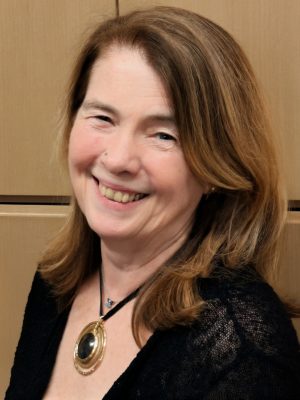 Dr. Lorraine Innes, a Katonah resident and Columbia University-trained psychiatrist, says TMS remains “under the radar” despite strong outcomes for many patients struggling with treatment resistant depression and other mental health conditions.
I had plenty of questions, so I also connected with Dr. Lorraine Innes, the psychiatrist who serves as medical director of TMS of Westchester.
‘UNDER THE RADAR’
In our nearly hour-long interview last month, Innes was clear, cautious, and detail oriented in taking me through her professional journey, the science behind TMS, and the road ahead.
After completing her psychiatry residency at Columbia University, Innes put down roots in Northern Westchester nearly three decades ago and built a local practice that eventually became TTC Psychiatric and, later, TMS of Westchester.
Something of a pioneer, the practice introduced TMS about 16 years ago and, in 2021, became among the first psychiatric groups outside the California-based developers of MeRT to offer the technology.
Given how none of that history is new, I found myself asking Innes a question that sounded sort of funny to ask out loud: Did everybody else know about this treatment and I somehow missed the memo?
“Its sort of under the radar,” the longtime Katonah resident did confirm for me. “People don’t understand it.”
Part of the issue, she said, is perception.
“People think it’s sort of ECT light,” she explained, referencing electroconvulsive therapy, commonly called shock therapy.
That fear has faded over the years, but it hasn’t disappeared.
Another apparent factor: some therapists worry their patients will abandon talk therapy if they do TMS.
“Sometimes a person will say that they want to try it and their therapist will actually discourage them,” Innes noted.
But as a practical matter, patients who feel better because of TMS are often more capable of successfully engaging in talk therapy, she stressed.
There’s also a seeming lack of general awareness about the option. While just anecdotal, I asked five area talk therapists their take on TMS for treatment-resistant depression, and all of them said they knew little to nothing about it, but were eager to learn more.
VALERIE SHOWS LOVE
Then there are the stories of those who do find TMS.
Back in 2021, Valerie was an 8-year-old child with autism. Sleep was difficult. Social interaction was limited. Communication often just consisted of whispers.
But she found her way to TMS of Westchester after her father heard about it on Facebook. After treatment, her mother, Veronica, reported improvements in her child’s sleep, speech and social engagement.
But the change she talked about most wasn’t any of those things.
“The way she shows love,” Veronica said in a social media video describing the most significant aspect of her daughter’s progress.
She said Valerie quickly showed minor but meaningful changes, noting how the small things can be the profoundly big things when parenting a child with autism.
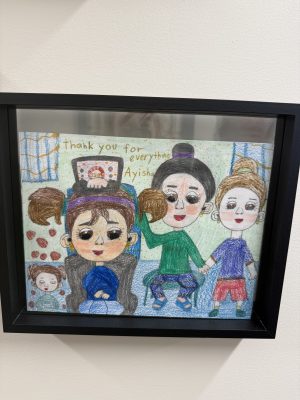
I even saw artwork Valerie created before and after treatment, and the difference is striking. Those pieces now hang proudly at TMS of Westchester and are included at the bottom of this column. See for yourself.
And as Meisner also told me, Valerie returned for additional treatment in both 2022 and 2024 – more gains were achieved.
Yet as our interviews about this therapy unfolded, a larger question came to mind. I asked Meisner if the treatment, at least in theory, could potentially help essentially anyone, in the age of optimization.
“You are absolutely right, anyone can benefit,” Meisner replied. “We use TMS and MeRT therapy for optimization as well as mental health conditions. When we first heard of MeRT, we thought it was too good to be true, so we all tried [it] on ourselves. We all had significant benefit.”
That said, too many people still can’t afford treatment, don’t live near a provider or don’t even know TMS exists.
If this therapy can offer hope to people who’ve run out of options, expanding awareness and access feels like a public health imperative.
WORLDWIDE RESEARCH
TMS uses magnetic pulses roughly comparable in strength to those generated by an MRI machine. Depending on the condition being treated, clinicians target specific regions of the brain involved in mood regulation and other functions.
“The brain works in circuits,” Innes explained. “We can not only hit that spot, but then the entire circuit.”
Researchers continue studying applications not only for depression but also OCD, PTSD, chronic pain and other conditions.
In fact, as I was writing this column, significant news broke: on June 3, the FDA cleared MeRT for use alongside other treatments for PTSD, a milestone many people in the field view as a major step forward.
“This,” Meisner remarked, “is huge.” (In essence, leaders in the field say the development will ultimately help usher in a new era where mental health treatment becomes far more personalized, using precise technology).
The timing was also notable because Innes had just returned from the annual Clinical TMS Society conference in Boston.
“We always learn something,” Innes said in our interview shortly before the trip. “People are studying this all over the world.”
‘GOLD MINE’ BUT NOT ‘MAGIC’
The numbers behind TMS are also pretty jaw-dropping. Research shows roughly 80 percent of patients experiencing meaningful improvement, while remission rates can approach 60 percent, Innes explained.
“In psychiatry, 60 percent remission is like you’ve hit the gold mine,” she said.
But Innes cautions against overselling the treatment as a panacea.
“It’s not magic,” she emphasized.
Even though she does not suffer from depression, Innes underwent the MeRT treatment herself before adding the option to her practice in 2021. She noticed improvements in her attention and word-finding ability.
“The words were much more available,” she told me.
Yet the patient stories are what inspire her most.
‘GOOSEBUMPS’
Innes recalled two severely depressed teenagers she treated more than a decade ago.
“They couldn’t launch,” she recounted. “They would start and then fail.”
Both eventually underwent TMS. Today they are thriving professionals. One became a social worker. The other became a neuropsychologist.
“It gives me goosebumps every time,” she said.
And her goosebumps bring me back to my goosebumps. As I was reading about studies on TMS and chronic pain, I received a text from Melissa with answers to my various followup questions.
“The neuropathy in my right hand that has been bothering me for over six months has suddenly stopped,” part of her message read. “I doubt that’s a coincidence.”
For those of us who care about Melissa, hearing about any relief from the mental and physical pain she has carried for years is music to our ears.
And no, none of this is magic.
It’s neuroscience.
Email me at [email protected] with your stories.
A young patient’s artwork, displayed at TMS of Westchester, shows a striking contrast before and after treatment.