
A small team is learning how to prevent a tragedy in the basement of a Butler County office building. They’re a part of LOSS/DOSS, Local Outreach Suicide Survivors and Drug Overdose Survivor Support Team.
Program director Jennifer MacLean tells the group those who lose loved ones to suicide are more at risk of suicide themselves.
“We couldn’t help those who died, but our hope is that we can help those who are left behind,” MacLean said.
Kendall Crawford
/
The Ohio Newsroom
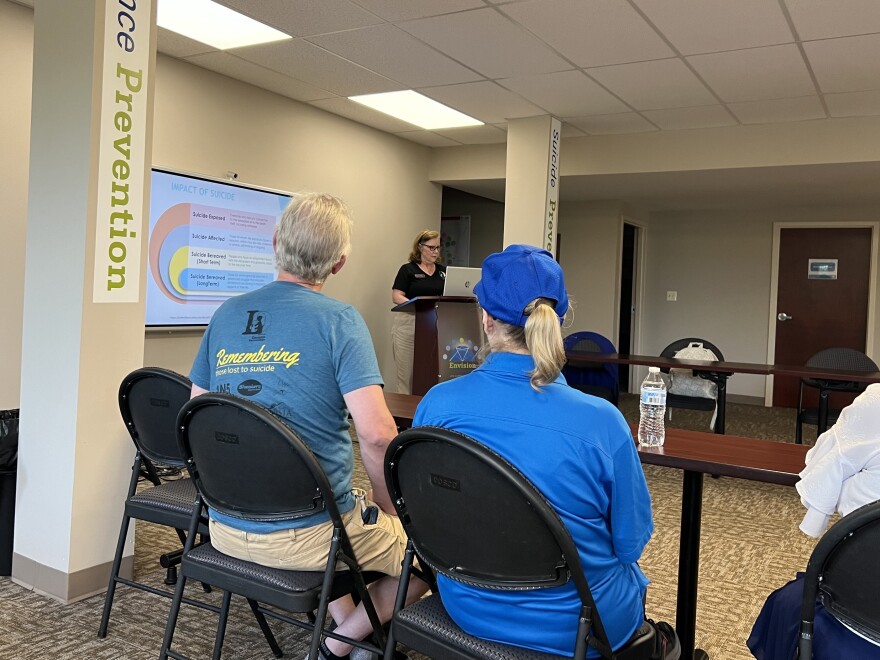
Jennifer MacLean gives a presentation on a suicide and drug overdose prevention program to interested volunteers.
Volunteer William Vetter Jr. understands the risks first-hand.
“I lost my brother to suicide in 2009, and that was motivation even 15 years later to be involved because I knew of that dark place that it threw me,” Vetter said.
So he, with the larger LOSS/DOSS team, will respond to the scenes of suicide and fatal overdoses, hoping to help those left behind and prevent future deaths.
That prevention approach sets it apart from the majority of the programs that Butler County’s Mental Health and Addiction Recovery Services Board funds. The state hopes to change that.
Twelve boards, like Butler County’s, have undergone training through the Ohio Department of Behavioral Health to better understand how they can stop crises before they begin. These Alcohol, Drug and Mental Health boards, or ADAMH boards, now have a prevention specialist to guide funding decisions.
A history of overlooking prevention
ADAMH boards fund behavioral health services for a county. The majority of their budgets focus on treatment: addressing a health issue after the fact through things like group therapy, rehabilitation facilities and sober-living houses.
But, Megan Roberts, Ohio State University professor of health behavior and health promotion said, in an ideal world these crises wouldn’t happen in the first place.
“Specialists focus so much on treating symptoms rather than, ‘How do we keep people from reaching a point of crisis?’” she said.
Roberts said it’s often more cost-effective to prevent health crises than to treat them. Tobacco education programs, for example, are cheaper than chemotherapy for lung cancer.
“But it just takes time,” Roberts said.
Kendall Crawford
/
The Ohio Newsroom
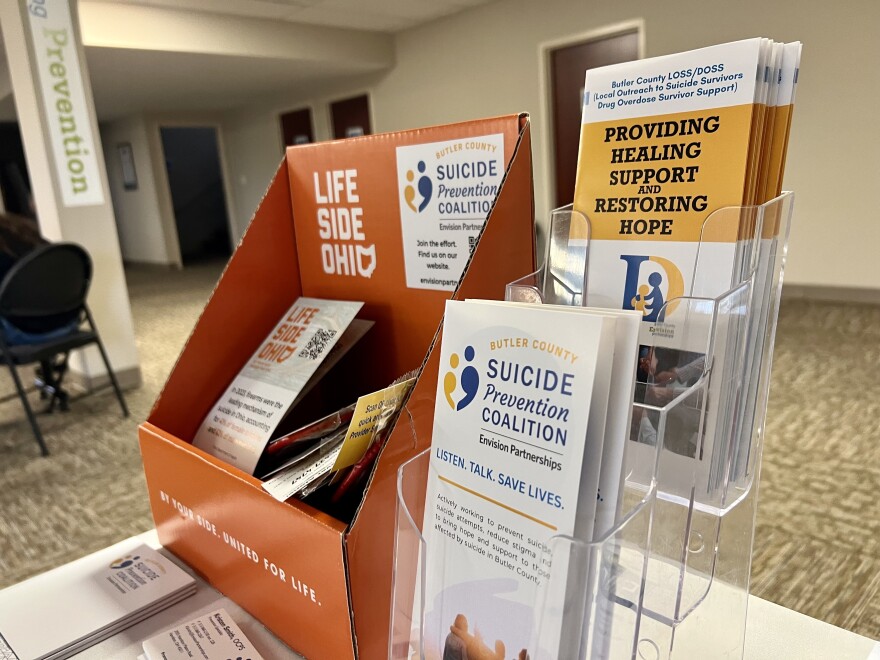
Suicide prevention pamphlets sit on a table at Envision Partnerships, a prevention agency in Butler County in southwest Ohio.
It also takes money. Unlike treatment programs, one cannot bill Medicaid or private insurance to help cover the costs of a suicide prevention program, like LOSS/DOSS.
It’s also more difficult to prove prevention programs’ success: it’s easy to count the number of people who’ve gone through rehabilitation for drug addiction. It’s more difficult to quantify the number of addictions or suicides you’ve prevented from happening.
“When you’re trying to report back to funders, when you were trying to show evidence or even make a splash in the news or on the media, the treatment is just so much more instantly gratifying,” Roberts said.
Maximizing prevention dollars
All of these challenges can make ADAMH boards hesitant to invest in prevention initiatives.
The state wants to change that. The Ohio Department of Behavioral Health launched a pilot program last year to add a prevention specialist to ADAMH boards. Rachel Canepa participated on behalf of Butler County.
“I didn’t really know a lot about prevention,” Canepa said.
Her board had already been funding programs like LOSS/DOSS. But the certification process helped her better understand how and why those programs worked.
Ohio Department of Behavioral Health
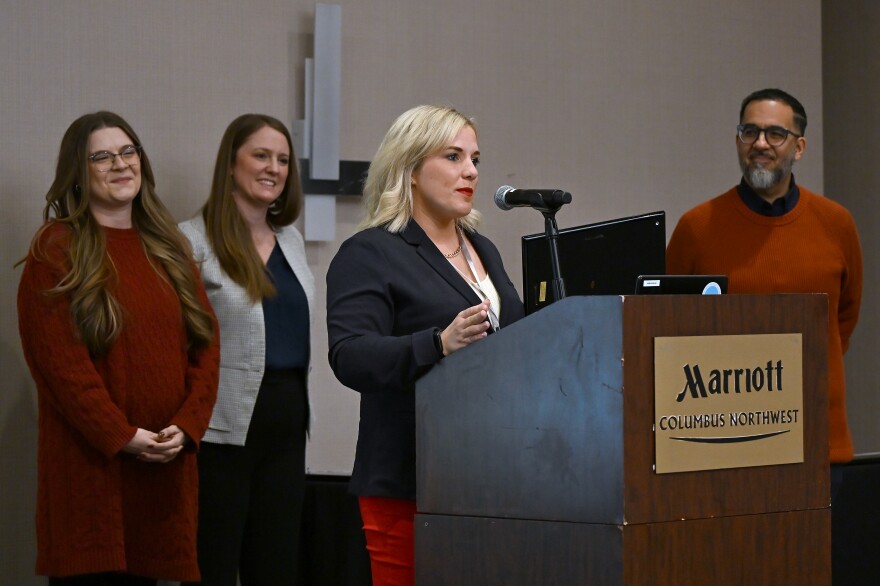
Rachel Canepa takes the podium at the Ohio Department of Behavioral Health’s prevention specialist certification ceremony.
She attended community listening sessions and partnered with a prevention ‘coach’. She began looking at county data to identify gaps. At the end of the six months, she said she had a clearer picture of where efforts were falling short.
“We can see, ‘Okay, we’re still having this amount of suicides: What can we do more in the suicide coalition to kind of help that? Who can we make connections and partnerships with?’” she explained.
The program’s lessons are already shaping local priorities. Canepa said she’s pushing for more dollars to prevent isolation in older adults. She’s also applying for grants to support families impacted by substance use, in hopes of curbing addiction.
It may be a while before those efforts translate into fewer suicides or overdoses. But state officials believe the impact could be far-reaching.
They plan to certify another 10 counties in prevention next month.