
One year ago, in the wake of the deaths of 11 people at the Lapu-Lapu Day street festival in Vancouver, B.C. Premier David Eby told grieving British Columbians that the province would review its mental health legislation to ensure it was working as intended.
This came after revelations that Kai-Ji Adam Lo, who has been charged with 11 counts of second-degree murder and 31 counts of attempted murder, had a history of encounters with police and the health-care system related to mental health.
It wasn’t the first time Eby promised to review the Mental Health Act. This week, the province declined to clarify the scope and timeline of the review, which has yet to be announced.
The Mental Health Act, which legislates the involuntary detention and treatment of people who have a mental illness, has been hotly contested in recent years.
As B.C. has put involuntary care at the forefront of its response to mental health and addictions issues in the province, some in the mental health field say the legislation needs to be re-evaluated with a focus on patient rights and safety.
Kyla Leland-Barnaby, a 24-year-old Indigenous woman living in Prince Rupert, B.C., says she spent five days in involuntary care last year after she had a panic attack that resulted in a family member calling the police to her apartment.
“When I had the panic attack, I did not need six people to come in and [handcuff] me and carry me out, I just needed help calming me down, not to traumatize me for life,” said Leland-Barnaby, who has a panic disorder.
She spent five days held alone in a room, with only a bed and a toilet. Once released, Leland-Barnaby spent the next two months in a homeless shelter, as she lost her apartment after the police response there. It’s made her wary of seeking other mental health support, she said.
“I think if the review of the Mental Health Act even helps a little bit, that matters a lot.”

People are pictured at one of the many memorials to the victims of the Lapu-Lapu Day tragedy. (Ben Nelms/CBC)
Why review the act?
In his previous role as B.C.’s attorney general in 2022, Eby promised the legislation would be reviewed and undergo other “significant modernization” efforts, as reported by The Tyee.
The announcement came after mounting calls for the act to be reviewed, including from an all-party provincial committee to reform the Police Act.
Kendra Milne, the executive director of the advocacy group Health Justice who works alongside people who have experienced involuntary treatment under the Mental Health Act, says parts of the act haven’t been updated since it was introduced in 1964.
“There’s this incredible need to modernize the law and I think, in particular, to make sure that it’s meaningfully protecting community and individual safety and well-being,” she said.
“When we look at other places that have modernized their mental health acts, we see things from it setting a quality of care… to make sure a person ideally leaves it feeling better than when they went in and not more traumatized.”
Health Justice has proposed a framework for reviewing the act, which has been endorsed by groups including the Canadian Mental Health Association and B.C. Civil Liberties Association.
Among other recommendations, it calls for the review to be independent from the government and informed by people from diverse backgrounds, including those with lived experience.
It asks to also consider how a person’s location and identity can shape how the legislation impacts them.
Milne says the review should also examine what leads someone to being in involuntary treatment, the quality of involuntary services they experienced, and what follow-up care they were provided following their discharge.
Jonny Morris, CEO of the Canadian Mental Health Association’s B.C. division, says that B.C.’s legislation should be brought in line with others across Canada, particularly in allowing individuals to entrust loved ones to make health-care decisions for them when they can’t.
“This is a once in a generation opportunity to examine a very, very impactful piece of legislation and we’d want it to be done very, very well to ensure people subject to the act, communities, people all feel that the outcome of the review is good and that the findings can make real change in the system,” he said.
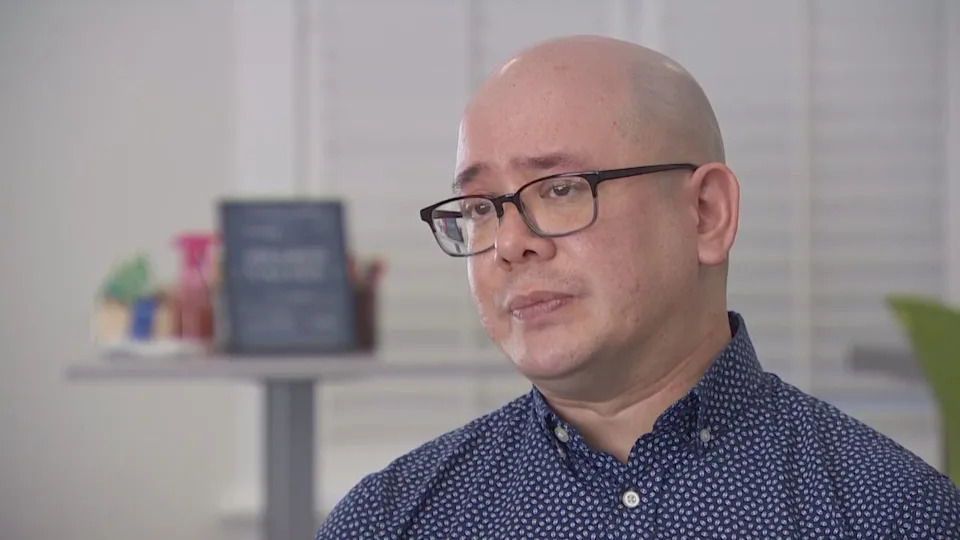
Jonny Morris, the CEO of the Canadian Mental Health Association B.C. division, says it’s important to ensure the review of the Mental Health Act reflects those who are subject to it. (Mike McArthur/CBC)
The implementation of the Mental Health Act, and the province’s increased focus on involuntary care as a response to mental health and addictions issues, has also fallen under fire.
Janine Theobald, executive director of Mental Health Recovery Partners – South Vancouver Island, says B.C. has the highest rate of mental health apprehensions in Canada.
She hopes a review would provide clear, consistent guidelines for health-care workers to cut down on what she sees as a broad disparity in how the act is applied.
A 2019 report from B.C.’s Office of the Ombudsperson highlighted a lack of safeguards for patients involuntarily detained under the Mental Health Act.
Earlier this year, an updated report found that patient consent forms that authorize involuntary care were only filled out 58 per cent of the time.
Why has it taken so long?
Health Minister Josie Osborne and Dr. Daniel Vigo, B.C.’s chief scientific adviser for psychiatry, toxic drugs and concurrent disorders, who Eby said will be part of the review, were both unavailable for an interview, according to the Ministry of Health.
In a statement, a ministry spokesperson declined to say why the scope and timeline of the review are still uncertain, beyond that B.C. is awaiting the outcome of a Charter challenge to the Mental Health Act.
The ministry also would not say if the review would be independent.
However, the spokesperson said they “recognize the importance” of including a diverse range of voices in the review, including those working with children, Indigenous people, and those with lived experience.
“This is an incredibly complex and challenging issue, and we want to make sure we get this right,” says the statement.
“We’ll have more to say on this soon.”
Though B.C. has not released any new information on the review, it has made changes to the Mental Health Act, which Eby argued was necessary to protect health-care workers from liability.
Claire Rattée, B.C. Conservative critic for mental health and addictions, said it is “incredibly disingenuous” for the ministry to wait on the outcome of the Charter challenge, but amend the legislation during that time.
“It’s starting to feel an awful lot like it’s not going to happen,” she said.
Rattée says the review is another unmet promise by the government.
Milne says she suspects the review has taken this long because of the challenge it poses for the government.
“Often what works the best for people and what has the most evidence behind it might not be the thing that is the most politically palatable,” she said.