
WEST VALLEY CITY — Lindsey Stevens said her son, Asher, is a bright, energetic fifth grader.
“He loves musical theater. He’s extremely intelligent and very gifted,” she said. “He’s just the cutest little guy, just very full of life.”
But early on, she sensed something was off.
“When Asher was a baby, he was very hard to soothe and settle — it was clear to me that I couldn’t use my normal, nurturing ways to calm him,” Stevens said.
As he grew into a toddler, those challenges became more apparent as he was easily overwhelmed by everyday situations.
“That came out in behavior — sometimes covering his face, screaming, he also needed a lot of personal space,” Stevens said. “As adults, we can say, ‘I’m anxious,’ but he was barely learning words and not very aware of his inner world. In fact, he was very much in his own world.”
After working with their pediatrician, Asher was referred at age three to The Children’s Center Utah, which provides mental health services for kids from infancy through age six. He began attending therapeutic preschool several times a week to help with his anxiety, along with family therapy to help his parents better understand his needs.
“We were able to learn about our child and what was going on for him, and enter his world,” Stevens said. “He started accepting things like hugs and started being able to gain the language skills that he needed to tell us a little bit of what was going on, and we learned cues to watch for.”
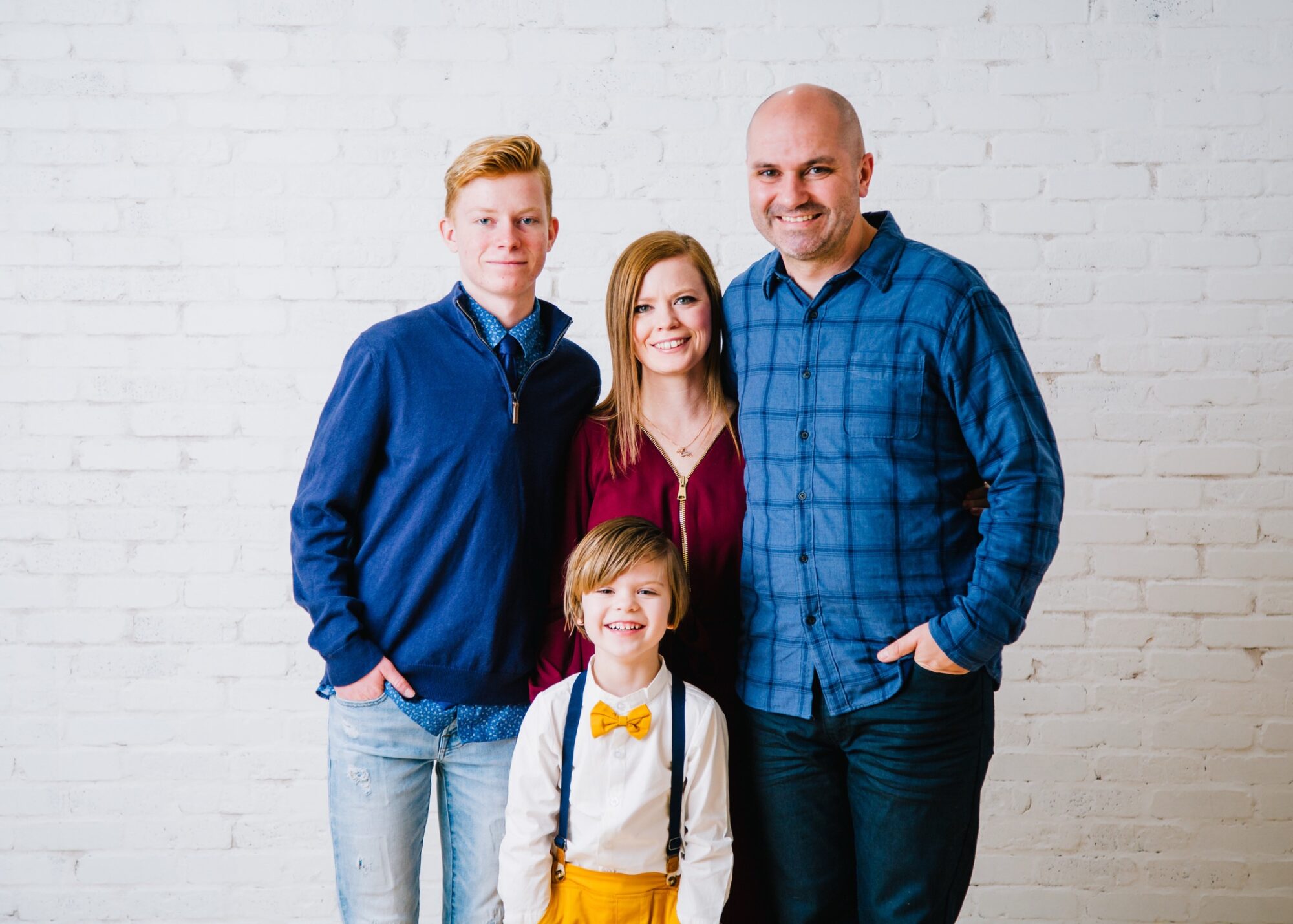
The Stevens family. (Photo courtesy: Lindsey Stevens)
Experts say that kind of early intervention is becoming increasingly critical.
“Mental health is important, even for the youngest among us,” Malinda Freitag, senior clinical director at The Children’s Center Utah said. “Most of us don’t realize that infants, toddlers (and) preschoolers, they all have mental health, and that mental health really impacts their development.”
One in five Utah children under age eight experiences emotional or behavioral challenges. Kids can experience stress, anxiety or trauma, which can show up as changes in mood or daily functioning, or even physical symptoms like stomachaches, headaches or fatigue.
“They may withdraw and not want to interact with their friends or their family. They may lose interest in things that they used to really like,” Freitag said. “When we’re able to intervene early, we’re able to shift that trajectory.”
Stevens said those early years of support made a lasting difference.
“He handles transitions much better now. He understands himself, so he knows what he needs when he’s struggling.”
The Children’s Center Utah is set to open another location in Lehi this July.