
The government committee headed by Professor Shlomo Mor Yosef on Sunday issued its first report recommending radical changes to the handling of 50,000 emotional trauma cases of former IDF soldiers to the Defense and Finance Ministries.
Mor Yosef, whose committee started operating in November 2025, said that such a committee should have been established at least a year earlier to deal with the skyrocketing numbers of physically wounded and emotionally traumatized, including post-traumatic stress disorder (PTSD) cases from the ongoing wars since October 2023.
While in March 2025, the ministry estimated it would pass 100,000 total wounded soldiers around 2030, as the war has continued and the number of wounded soldiers in Lebanon has jumped, the new estimate for crossing that threshold has been moved forward to 2028.
The committee said that though the ministry had already made many changes to streamline approving financial benefits and emotional treatment for soldiers as compared to prior to October 7, the changes are nowhere near sufficient.
Instead, the committee said that the ministry must establish a new, almost completely independent authority to handle the issue.
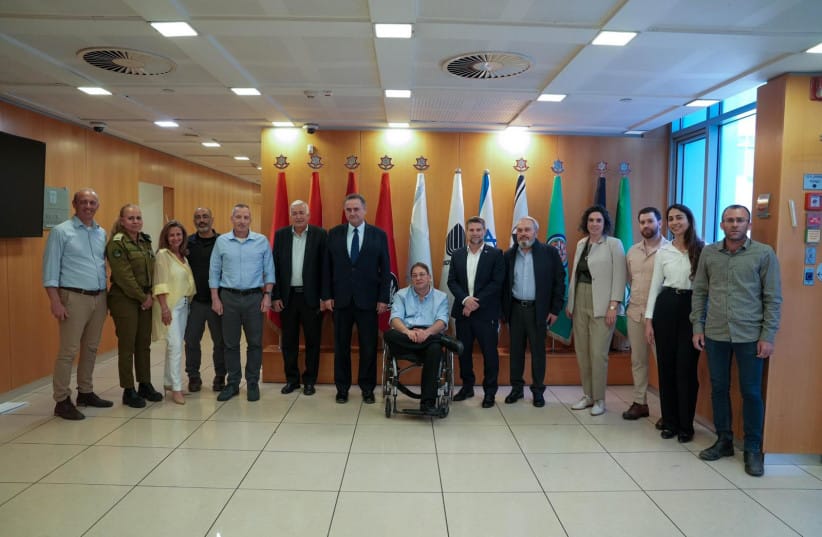 Professor Shlomo Mor Yosef’s goverment committee issued its first report recommending radical changes to the handling of 50,000 emotional trauma cases of former IDF soldiers to the Defense and Finance Ministries. June 7, 2026. (credit: DEFENSE MINISTRY)
According to Mor Yosef, the ministry, with around 25 subdivisions, cannot be counted on to move fast enough in handling the issue.
But separating out this new authority, with its own budget, computer services, new resources, and authority to act without too many layers of still existing red tape, will improve the situation.
In terms of budgets, the committee said that while the budget for this issue has already jumped from around NIS 5 billion to NIS 10 billion when comparing 2023 to 2026, another NIS two billion per year is probably necessary, along with a one-time investment of more than NIS 500 million in establishing the new authority.
Proposed changes requirenew legal actions
Many of the changes recommended by the committee require new legal actions.
Given the upcoming elections and the low likelihood that the Knesset can act fast enough on some of these thorny issues, Mor Yosef recommended that the current government immediately pass new government regulations to authorize the changes on a more rapid basis.
Unlike past wars, where emotional traumas usually made up around 15% of claims filed, since 2023, around 50% of newer post 2023 war claims filed include emotional trauma, like PTSD.
This is out of around 25,000 claims filed relating to recent wars since 2023.
One major change the committee recommended is financing a weekly emotional trauma visit, as opposed to only once every two to three weeks.
While previous ministry announcements have talked about individualizing services from the ministry for each harmed soldier, including for PTSD, the new policy would invest in this more heavily, including putting new serious budgets behind it.
In addition, the ministry would provide an IDF representative when a harmed soldier comes before the committee for approving or rejecting requests for recognition and benefits.
In the past, many soldiers have complained that the committee treats them too much like litigants, instead of showing sensitivity to their sacrifices and traumatic experiences.
Further, the committee said that special side clinics should be established within areas where medical centers receive PTSD patients, such that former soldiers can be exclusively around other former soldiers, with similar issues, and less around chronic emotionally traumatized patients who often come from different backgrounds and have different kinds of issues.
Also, the ministry said that it would fund, negotiate, and organize the streamlining of carrying out more services for dealing with physical and emotional harm by digital processes and through the various large health insurance companies.
Artificial intelligence (AI) capabilities will also be used to move recognition and treatment processes along faster.
Total claims of harm are now up to 87,000, with around 31,000 emotional trauma and PTSD claims.
12,500 of the claimants from the current war, or around 50%, are above age 30.
16,000 of the claimants, or around 64%, are reservists.
2,000 of the claimants are women
AI in mental-health operations
In January of this year, the Jerusalem Post reported exclusively that the IDF and the ministry had made a major advance in using artificial intelligence to improve mental-health operations at medical centers, which handle soldiers with PTSD.
While there is a full spectrum of treatments to handle symptoms – including group-based, individual, and occupational therapies – one focus is simply helping individuals calm down in the event of a negative episode.
The new medical IDF AI unit developed procedures for medical professionals to use EEG machines working with AI to provide feedback on individualized “calming cues.”
A soldier can now meet with a mental-health evaluator, including using an EEG and AI, and then have a discussion.
There is research about whether exposure to a girlfriend or a beloved song during a rough episode has a better impact and improves stability and calmness, the unit’s commander told the Post.
AI can help figure out triggers for problems or for progress, he said.
Yet another area where AI is assisting in mental health for soldiers is helping reduce professionals’ record-keeping time, so they can invest more time in meeting with patients sooner and more often.
For example, without AI, mental-health professionals could spend a full hour analyzing a given set of records, during which they are not actually meeting with soldiers.