It’s a subliminal truth we all know — we can’t function very well with less sleep or unpredictable schedules. Repeated enough, such changes have bigger effects — disrupting our bodily rhythms and contributing to alarming health consequences.
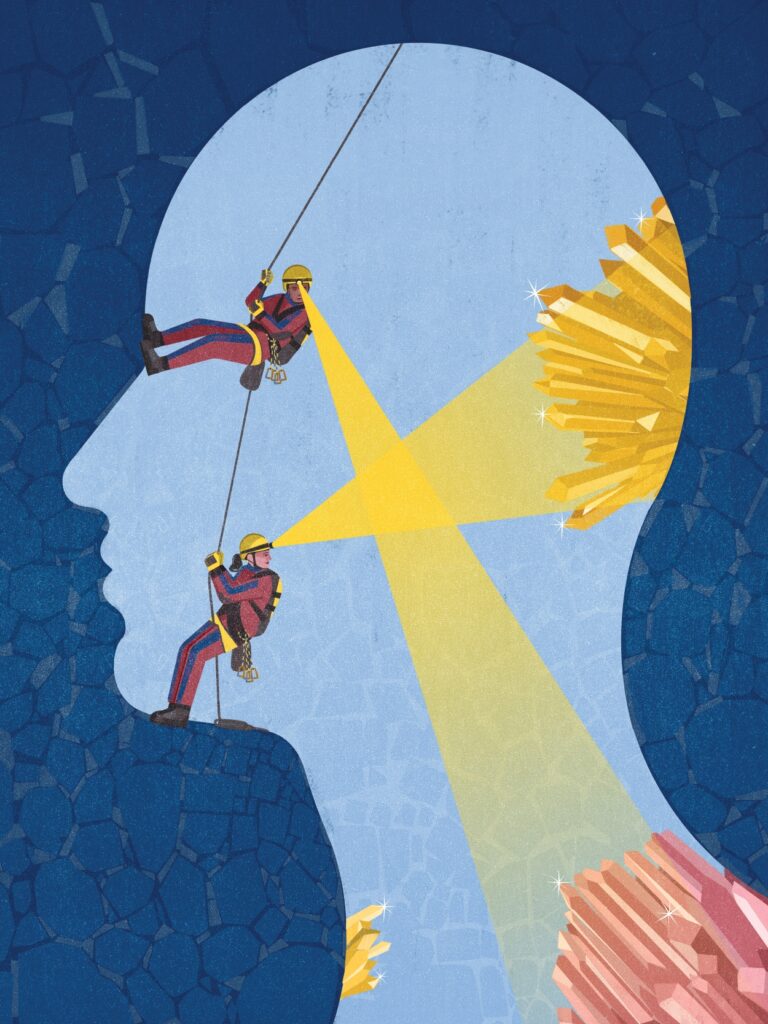 Quest for Healing Discoveries: Marquette Magazine cover story
Marquette is fortunate to have two faculty experts in circadian rhythms, each with distinct but complementary perspectives. Dr. Jennifer Evans, professor of biomedical sciences, is most interested in the effect of body clock disruptions on the nervous system and mental health. Dr. Deanna Arble, associate professor of biological sciences, focuses on circadian implications for conditions such as obesity, respiratory distress and sleep apnea. While independently making influential health discoveries, they’re also preparing to work together on forthcoming research, exploring how the body clock connects physical and mental health conditions — as rarely studied before.
Meet Marquette’s circadian scientists
Evans is a classically trained “rhythmist” whose background lies in psychology and behavioral neuro- science — think mental health, motivation and mood. Arble studies neurology’s influence on physiological systems — respiration, metabolism and sleep.
Each oversees prominent research contributing to circadian science, with Evans stewarding a $1.8 million National Institutes of Health R01 grant on how light is processed by the brain, which presents differently in men and women and leads to important implications for seasonal affective disorder. A separate NIH grant investigates how mutations in circadian clock genes influence brain processing of light; it suggests exposure from nightly screen use likely increases the risk of cancer, impaired cognition and severe immunodeficiency.
Arble recently won a prestigious $1.25 million CAREER grant from the National Science Foundation, recognizing high-achieving early career faculty. With it, she is mapping the circuitry light follows from the eye to the suprachiasmatic nucleus, the body’s master clock. Unique nationally in their focus on this area, Arble and team track light disruptions at night and measure breathing suppression, collecting key data on respiratory patterns and susceptibility to illness and obesity.
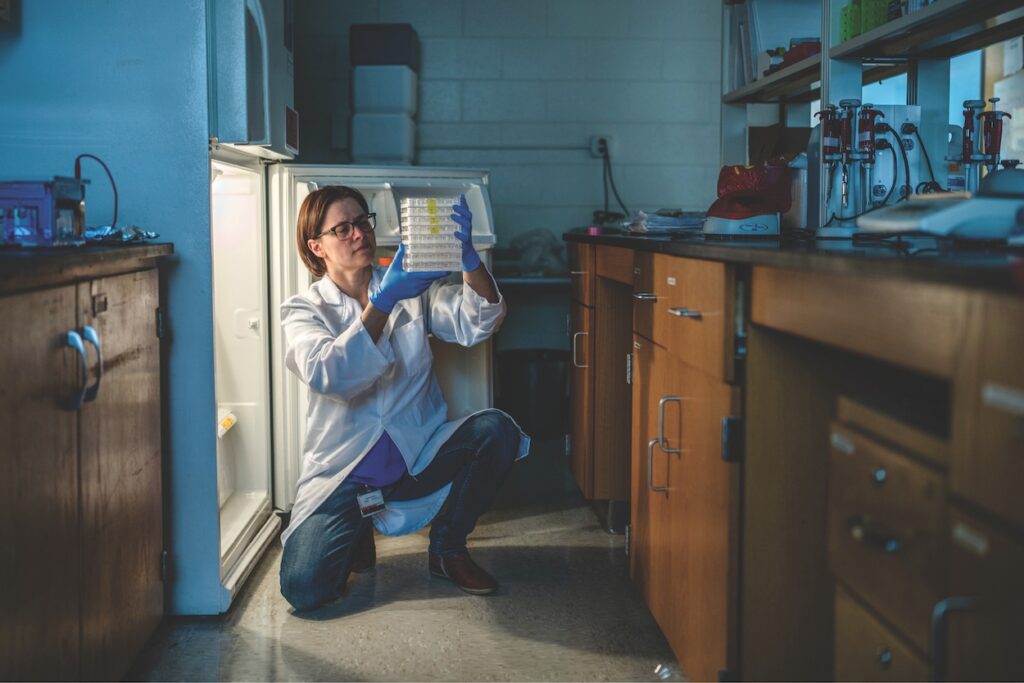 NSF CAREER-awarded researcher Dr. Deanna Arble suspects light controls fundamental aspects of our biology. Hers is the only lab in the nation seeking to identify how environmental light impacts breathing.
Focusing on topics that touch all of us such as sleep, eating patterns and what to do with each to be healthier, “Deanna has an especially winning model in the field by integrating two areas — biological clocks and a clinical condition,” explains Evans. Typically, researching body clocks and obesity would require two experts from different fields, she says. “But Deanna is an expert in both those things, contained in the same person — that’s rare.”
Daily light, rhythms and circuitry
Evans and Arble are building on the discovery that every cell in the body retains its own daily clock — a genetic expression of the larger one. Since the master and cellular clocks share messaging, the SCN influences every system in the body. “Hormone expression, body temperature, metabolism, and sleep are all rhythmic,” Evans says.
As clinicians catch on to circadian research — how time matters as a factor in our health — drug dosing and therapies can become more effective. “A drug is supposed to attach to a receptor. That drug better be in your body at the right time of day to attach,” says Evans. Most major FDA-approved drugs on the market have a dosing-time target, informed by circadian rhythms. Yet patients are often not informed about dosing time. They risk not hitting the right time frame to reap the drug’s therapeutic benefits — and risk experiencing unwanted side effects.
Arble sees similar risks with sick patients being cared for in aggressively lit ICUs that disrupt their body clocks. “You’re taking someone with breathing depression and increasing their chances for respiratory distress,” she says.
 The human biological clock is not fit for shift work, which puts people at higher risk of disease — so much so that nurses in Denmark receive hazard pay. “Shift workers have higher mortality rates, higher rates of cancer, reproductive issues, cardiovascular issues and metabolic syndrome,” Evans says.
“While we work to shorten the gap from research to clinical findings, it’s been extremely rewarding to see circadian rhythms capture public attention,” Evans says. Integrating circadian and clinical medicine is closer than ever before.
“We’re at the tip of the iceberg,” says Arble. “There’s only progress from here.”